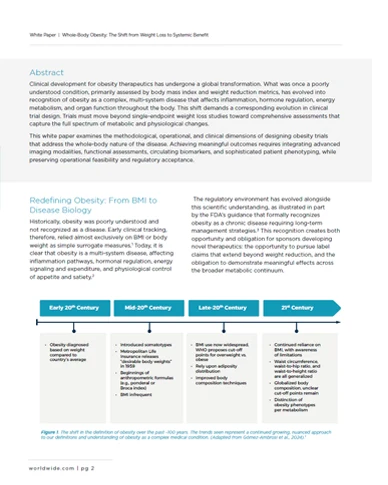
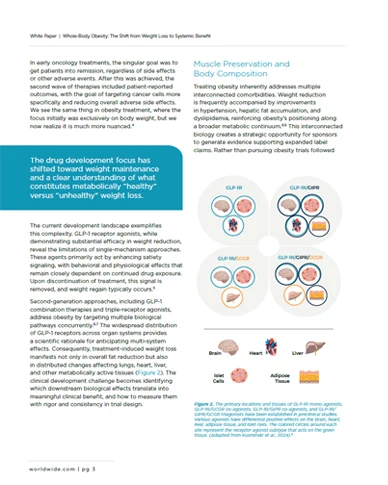
Obesity has undergone a significant reclassification, changing from a condition assessed by BMI and weight-loss metrics to a recognized, complex, multisystem disease that disrupts inflammation pathways, hormonal regulation, energy signaling, and organ function throughout the body. The FDA’s formal recognition of obesity as a chronic disease requiring long-term management strategies has created both opportunity and obligation for sponsors developing novel therapeutics. As GLP-1-based therapies have definitively established that meaningful weight reduction is pharmacologically achievable, we now see weight loss as necessary, but no longer sufficient. Success requires integrated assessment of the multisystem effects that characterize obesity as a whole-body disease, alongside the operational capabilities to execute complex protocols.
Read our white paper to learn more about:
- How the transition from weight-centric to whole-body trial design is reshaping endpoint strategy, advanced imaging modalities, and biomarker integration
- Dominant patient phenotypes now shaping obesity trial design and execution, and the operational strategies required to design meaningful and successful trials
- Why paced enrollment, deliberate site selection within established weight management programs, and anchored patient-physician relationships are emerging as critical determinants of trial success