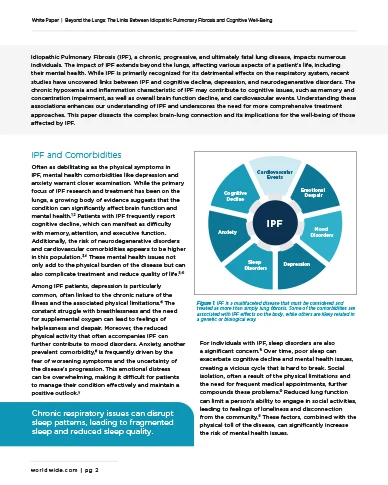
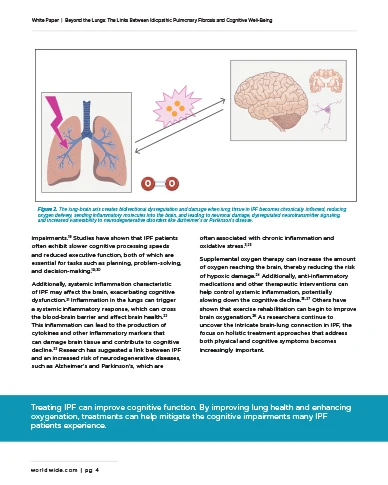
Idiopathic Pulmonary Fibrosis (IPF) is a chronic, progressive, and ultimately fatal lung disease that extends its impact far beyond the respiratory system. Emerging evidence reveals significant associations between IPF and neurological complications, including cognitive decline, depression, and neurodegenerative disorders. The chronic hypoxemia and systemic inflammation characteristic of IPF may contribute to memory impairment, concentration difficulties, cardiovascular events, and overall decline in brain function. These complex interconnections necessitate a paradigm shift toward more holistic treatment strategies that address both pulmonary and neurological manifestations.
Read our white paper to learn more about:
- How chronic hypoxemia and inflammation in IPF patients contribute to cognitive impairment, memory deficits, and concentration difficulties, potentially accelerating neurodegenerative processes and complicating disease management
- The emerging evidence linking IPF to depression, cardiovascular events, and broader neurological decline, and how these associations impact patient quality of life and clinical trial endpoint selection
- The critical need for comprehensive, multidisciplinary treatment approaches that address both respiratory function and neurological health to optimize patient outcomes and inform future therapeutic development strategies