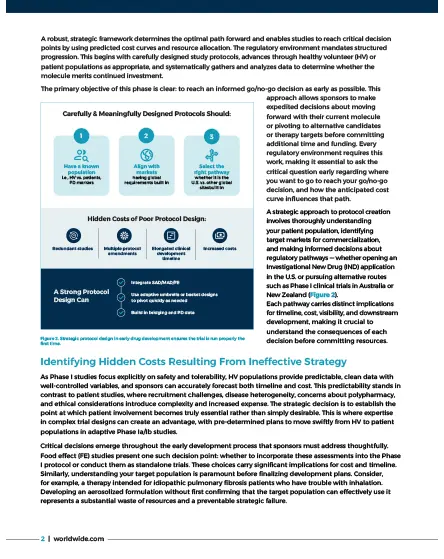
Phase I clinical development is one of the most critical decision points in a novel therapeutic’s journey. Poor planning at this stage leads to hidden costs, regulatory complications, and delayed go/no-go decisions that drain resources and momentum. The pressure to move quickly can lead investigators to overlook essential strategic considerations. These span regulatory pathway selection to market-specific requirements, ultimately costing more time and money than a well-designed protocol would have. This guide provides investigators and pharmaceutical sponsors with a strategic framework for optimizing Phase I protocols to reach efficient go/no-go decisions while avoiding common pitfalls.
Read our guide to explore more about:
- How strategic market planning should drive Phase I protocol design, not follow it
- Critical regulatory pathway decisions and their impact on development timelines and costs
- Indication-specific considerations for oncology, CNS, and metabolic disorders
- Adaptive protocol designs that preserve strategic flexibility while managing resources effectively